Showing posts with label steve sutherland. Show all posts

Saturday, January 23, 2016

The David Bowie I knew, and what it says about me

There's been no end of great (and also rotten) pieces written about David Bowie, but none perhaps as strange as former NME editor Steve Sutherland's bit which appears in the Stratford Herald. Oddly - I suspect as a quirk of a local paper's publishing system - the online version appears under his wife's byline.

It turns out Steve attempted to save Bowie from Tin Machine by sending him a shoegaze mixtape:

Now, knowing his reputation as a magpie, scarfing up other people’s ideas, sprinkling some fairy dust on them and then successfully representing them as his own, I figured Dave might benefit from an earful of some new stuff, so duly made him a cassette.

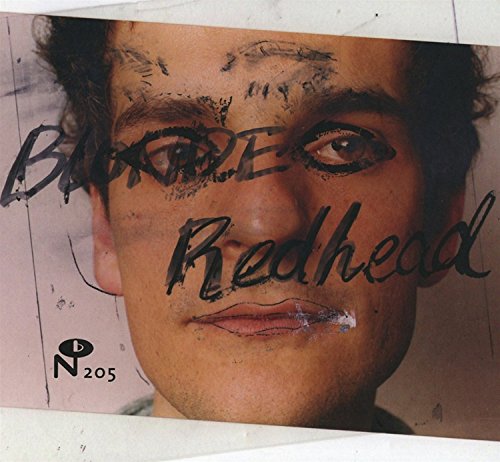
The tracklisting went something like Lush, Moose, Chapterhouse, Adorable , Slowdive, The Jesus and Mary Chain, My Bloody Valentine, Telescopes, Ride — a veritable who’s who of shoegazers making a name for themselves at the time and a line-up I felt sure would top-up Dave’s creative juices.

Just goes to show how wrong you can be! A few weeks after I sent him said tape, I received a very nicely wrapped package which contained a small broken-up jigsaw of Michelangelo’s David. When the pieces were all put in place, there was a message handwritten on the back in, if I recall correctly, green ink, the gist of which went something like, “Thanks for the lovely tape. Not really my cup of tea. Try this instead.” The “this” was a cassette tape of Different Trains, an interminable modern classical piece by avant-garde composer Steve Reich performed by the dreaded Kronos Quartet. Shudder.
It turns out that Steve - by this point having moved from the Melody Maker to the NME - had a bit more luck with the next generation of British indie stars:
My last encounter with Mr Bowie was not long after I took over editing NME. All the staff hated me for reasons we needn’t go into here but I figured — rightly as it turned out — that if I could deliver a journalistic coup, they might come around.

So what I did was arrange for David Bowie to meet Brett Anderson from Suede, who were then the hottest band in Britain. I sat in on and taped their conversation with Brett, being a big fan, asking tons of questions and Bowie, being Bowie, offering up sage avuncular advice about not doing too many drugs like he once did etc.

Again, a fun day made easy by Bowie’s polite and gracious ease in company, and his genuine interest in what Brett had to say.
Brett and Bowie, coming together to save an NME editor. There's surely a Hollywood movie in that?


Sunday, February 26, 2012

The NME at 60

There's a nice piece in The Observer today looking at the sixty years history of the now-defunct NME through editor's favourite covers.

I say sixty years; there isn't anything from before 1979. And, somewhat oddly, there's no contribution from Conor McNicholas. They don't quite have the current editor, either:

As you can see, Krissi Muriso(n) has picked her Simon Cowell Christmas double from 2009 as her best front page.

It was certainly a provocative choice for an NME front, but to be honest, what else would she have gone with? The last couple of years of fronts of the NME have felt like a constant rotation of Noel Gallagher/long dead pop star/list issue/Liam Gallagher.

In fact, just how out of sorts the NME front page has become is shown by the choices of the other editors of what was 'of their time'. All the previous decade's choices have featured in the last quarter of the magazine as well.

So, Alan Lewis picks The Stone Roses cover from November 1989; They got two front pages in October 2011 (and, I suspect, will be on there again before the year is out.)

Steve Sutherland picks the Blur v Oasis battle, a clash that still rumbles on with Noel having last shown up on the front page last week and Blur, erm, this.

Neil Spencer has picked a punk cover; next week, unbelievably, the NME is putting the Sex Pistols on the cover. (Spencer's choice, incidentally, is the Slits nude-mud cover, which was genuinely challenging and part of a debate, rather than Lydon banging on like a pantomime dame again.)

Murison, whose editorship started well and has spiralled down noticeably over the last year or so, ending up with a Beatles front page at the turn of the year, attempts to sum up the current editorial stance of the paper but unfortunately ends up sounding like a letter to Smash Hits, circa 1986:
I started just as dubstep had gone from underground to overground and artists in whatever genre were generally being more experimental. People always say to me that such-and-such is an NME band but that doesn't mean much to me. There are two types of music, good and bad, and genre doesn't come into that.
Looking at the list of acts who have appeared on the front pages, or in the lists of best albums, that starts to ring a bit hollow. A magazine that genuinely believed that would be something to behold - jazz rubbing against interesting noise against folk.

But that's not what the NME is - in fact, what seems to be the definition of an NME band in 2012 is 'was it an NME band in the last century'?


Friday, March 07, 2008

Happy 56th birthday, NME

Perhaps the most encouraging thing for IPC as they read Stephen Dalton's Times piece on the NME is that, while it's not an entirely encouraging read, there aren't many magazines whose 56th birthday (or, come to that, future direction) would be considered worthy of an editorial piece in the heavyweight papers.

Dalton lands a couple of blows on the current magazine - calling it like a "training-bra version of Heat" - but is generous to current and former staffer's contention that the NME is always haunted by its past:

“Generations of them, all moaning about how NME stopped being good at the exact moment they stopped buying it,” complains Steven Wells, one of the magazine's star writers in the 1980s and early 1990s. “It must really suck to be an NME writer these days with this bloated Greek chorus of balding middle-aged naysayers on your back.”

It's true, of course, but what might be more alarming is that (unless we're missing something) there aren't many people who read the magazine five years ago who insist that it's gone downhill. The 'not as good as in my day' crowd are paying the brand a tremendous complement by stressing how important the NME was to their musical development. That people are harking back to the early 2000s version suggests that - for about a decade - it's not really held that position. The challenge for the NME is not the crowd of old gits complaining that it's changed, but that their ranks aren't being swollen any more.

Steve Sutherland (former editor, now heading up the division of Time Warner which publishes the magazine) tells Dalton that paper version has a future, but even if it doesn't, it doesn't really matter:
Sutherland dismisses speculation about closing the weekly magazine, at least for now. “Am I married to print on paper?” he asks. “Would I weep buckets if, in 20 years, NME was talking on a minute-by-minute basis with millions of music fans all over the world but the magazine had passed on? Personally, no. Do I believe that will happen? No again.”

It's perhaps unfortunate that Dalton spends most of the piece detailing why it wouldn't matter if the magazine folded - it's online, it's possible to read the NME without buying the magazine, there's a lot of similar stuff around - without actually managing to offer an argument of why it might matter if it did go. There's a space for an intelligent, passionate, popular-ish publication which writes about music like it's important, that realises some music can be more like an initiation than a pastime which presents its world as a clique that you could be part of. The NME isn't that publication at the moment, but it's the only hope we've got of getting one, as nobody would be able to start from scratch to fill that void. You need a friend who likes what you like if you're to trust someone when they tempt you to try something new, and there's no reason why the NME can't be that again, for a new generation. Of course, the brand can make money hosting awards bashes at the Millennium Dome and serving up news gobbets about Pete Doherty, but without rediscovering some heart and passion for the core magazine, it's going to be a brand supported only by its receding heritage.