Showing posts with label jude rogers. Show all posts

Sunday, January 10, 2016

Bookmarks: Pop music

Jude Rogers has done a great piece for The Pool on why pop music is brilliant:

Pop music provides emotional links back to our earliest memories and experiences, for starters. Speaking personally, it takes me, The Mum, back to me as A Child, straightaway. (My first memory? Being allowed to wash the dishes with Grandma at two-and-a-half, singing along to ABBA's Super Trouper on the radio.) It also takes me back to my parents as parents, fitting my feet into their shoes. Oh, the times I'd tell my dad what was No 1 in the charts (like The Flying Pickets' cover of Yazoo's Only You in Christmas 1983 – probably the first Christmas I can blurrily remember). Oh, the times Mam would make car journeys better by playing her Sounds Of 1963 cassette (me wiggling my shoes to The Swinging Blue Jeans' Hippy Hippy Shake as we headed off on holiday). Music soundtracked my first impressions of these important people, and it's not a coincidence. It's the way we are wired.


Saturday, April 05, 2014

Bookmarks: Damon Albarn

It's a pity that Damon Albarn's grumpy-old-manning about the internet is the bit that The Quietus are pushing on Twitter (ironic, given that he's mostly moaning about Twitter). The whole of Jude Rogers' interview with Albarn is a sublime piece of writing and observation:

We didn't film outside my actual house. I’d been there quite a few times before we filmed, just to see it. It's such a personal, strange thing to do...to just stand outside, trying not to get noticed by anyone. And then the day we were filming, the door opened, and I thought, "Oh God"... and this very elegant, conservatively-dressed Muslim girl in her mid-20s came out. And straightaway she went, "Hello Mr. Albarn". And I went, "Oh!" She said, "I know you used to live here," and I went, "How do you know that?" Then she told me that when she was a little girl, around 1995, another film crew came round and she remembered her Mum wouldn’t let them in. "And she won’t let you in now," she said. [laughs] Which is understandable! Then at the end she went, "Good luck, I know you’ve got a new record coming out" – she knew everything, basically, about me. I thought that was really, really nice, so I said, "Give my love to the house", and she said, "I will do." In that little moment, I felt that connection with the house and the people in there...I was really pleased about that.


Friday, February 01, 2013

Neil McCormick files Observer piece for The Telegraph

Neil McCormick, friend of Bono, has given Telegraph readers a crash course in Kraftwerk.

Some readers got an uncanny sense of deja-vu. Didn't McCormick's piece, "Kraftwerk: the most influential group in pop history?" have more than a passing similarity to Jude Roger's "Why Kraftwerk are still the world's most influential band" that appeared a few days earlier in The Observer.

When challenged about this on Twitter by @theboylightning, McCormick invented a new irregular verb:

It's called sampling. It's the modern way. (I'll give you 2 sentences out of 1200 words on exactly the same story)
I sample, you lift, he/she plagiarises.

McCormick put his hands up to lifting a line from Rogers about a Melody Maker review. By this point, Jude had joined the conversation and pointed out that a big chunk of her research had turned up in his bit:
The huddling together of facts about Afrika Bambaataa, Uranium and The Model also rang a few bells. Ding dong.
McCormick claimed you can't write a Kraftwerk article without throwing those bits in. Which might be true, but it's the way they're folded in. Here's Jude in The Observer:
Afrika Bambaataa fused the melody of Trans-Europe Express and the rhythm of 1981's Numbers to create Planet Rock, one of hip-hop's pioneering tracks. Trailblazing electro group Cybotron used a loop from 1977's Hall of Mirrors; its founder, Juan Atkins, would create techno, and from there came modern dance culture.

Back in Britain, New Order would sample Uranium on Blue Monday, while synth-pop inspired by albums such as 1978's The Man-Machine would set the decade's pop mood. Kraftwerk would even get a No 1 single, The Model, in February 1982, four years after its first release. It was if the world was finally catching up with them.
And here's Neil's scamper through the history:
Afrika Bambaataa’s groundbreaking 1982 hip-hop dance smash Planet Rock was built around Kraftwerk’s Trans-Europe Express. The same year, Kraftwerk’s The Model hit No1 in Britain, four years after its first release. In 1983, New Order sampled Kraftwerk for their breakthrough dance rock hit Blue Monday. By the end of the Eighties, a whole new dance scene was emerging.
It could be coincidence, but it doesn't half read like a precis.

McCormick then offered an even more bizarre defence:
I figured, who actually reads both the Guardian & The Telegraph (apart from me obviously)
I'm sure Neil didn't mean to make that sound like "I didn't think I'd get caught", (and interesting that he doesn't appear to know what paper the article was originally in) but it does sound a bit like that. In much the same way his Telegraph piece sounds a bit like Jude Rogers in The Observer.


Tuesday, July 13, 2010

Bookmarks - Internet stuff: Louise Wener

Hopefully, the next edition of Louise Wener's Different For Girls can drop the off-putting thumbs-up on the cover from Fearne Cotton now that Jude Rogers has reviewed it for the New Statesman:

Wener also dismantles the myth that the likes of Blur were intelligent pop revolutionaries. She describes their rudeness, their ruthless ambition and their "easy, bohemian, moneyed odour". And then there are the groupies. Wener leaves nothing out. The bassist Alex James tells a young woman, "You're ugly, but I'm going to fuck you anyway," while their tour manager is despatched to select attractive girls from the audience and give them after-show tickets, known as "Blur-job passes".


Thursday, October 29, 2009

Bookmarks: Some stuff to read on the internet - Boybands

Jude Rogers talks to five singing hatstands from various boybands, including one of East 17, The Jonas Brothers. Oh, and Simon Webbe:

I don't think an all-black boyband like JLS would have been signed in the days when we were starting out. The X Factor's great in that way: it shows the record companies what people really want – especially as most labels are run by old guys who have no idea what's going on in clubs or on the streets.


Saturday, January 12, 2008

Bookmarks: Some stuff to read on the internet

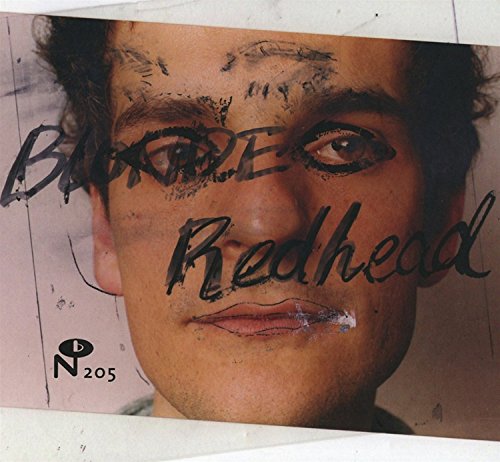
Bradford Cox writes about his heart condition and his healing music project:

The girl next to me was a really sad situation. She was the daughter of a high profile player for the Atlanta Braves. She contracted E-Coli from a Whitewater amusement park and was in terrible pain and screamed constantly. Her parents had to leave her at night and she just screamed and screamed and I tried to drown it out with my walkman. One day I woke up and her bed was gone and there was no screaming. She had died in the middle of the night. That's how I spent my sixteenth summer. Which might explain why I refer to that age so much on Cryptograms. It was like an invisible summer that never happened.

Stuart Maconie in The Times argues that this, this is our Golden Age:
Do you know what’s at No 1 right now? OK, it’s probably something from The X Factor but you take my point. Unless you’re Simon Cowell nobody gives a toss about the charts except for a week in late December when it becomes a kind of dull tabloid equivalent of the Boat Race. Is this such a bad thing? What matters more to you, whether the new Morrissey/ KT Tunstall/ Sigur Rós album is any good? Or its first-week chart placing?

... and, Jude Rogers makes a similar point in The Guardian's Film and Music supplement:
Thom, Damon and Noel and the post-punk pinchers rule only if you choose to track contemporary music as a guitar-obsessed timeline. Second: the idea that hunting for music these days is an easy task is nonsense. The internet may have made the act of searching simpler, but the profusion of music online means finding good stuff is still as tricky as the Velvelettes trying to find their needle in a haystack.

What this explosion does do, however, is expand our chances of finding like-minded souls who might point us in the right direction. Then factor in the number of emerging artists, plus the pressure on major labels to stop being "boring" (thanks, Mr McCartney) and engage with an internet audience. Now tell me this decade isn't amazingly alive.