Tuesday, November 28, 2006

Let's hope it was a piano tuna

To be honest, we can't find it in ourselves to be interested in the former girlfriend of Ben Mills - apparently he's on the X Factor on something called ITV - being fined for dumping fish in his piano when he dumped her, but we couldn't resist the piano tuna joke.


Fergie: the unquiet soul

It turns out that like Thatcher, Fergie gets up to work in the middle of the night:

"You can't assume any success.

"Usually artists spend time in the studio recording an album, then they do prep, then they do press. And then they tour.

"Most find it hard but I love it.

"I even get up at three in the morning sometimes to work."


Aha... that explains why much of the record sounds like it's written by someone in their sleep, then.


Cashback for (not) good

Michael M emails us with the news that Jason Orange ended up in tears when he sang. And not in a Johnny Ray way, either:

Take That singer Jason Orange was left in tears after recording the solo vocals for a new album track, according to The Sun. The group were reportedly in Los Angeles finishing their new record Beautiful World when the singer broke down. After recording the lead solo vocals for 'Wooden Boat' Orange apparently began crying because he was so proud of his efforts. He has come under much scrutiny as a singer in the past, and was accused by journalists of only being in Take That because of his skills as a dancer.

Maybe he sobbed, but we bet the sobs were nothing to the frightened cries that little children have been bursting into during the ITV trail for An Audience With Take That when Gary Barlow appears - out of nowhere the screen is filled with Barlow looking like something midway between the star of an Al-Qaeda suicide video and those hapless blokes entrapped by US television into turning up at thirteen year old girls' homes carrying duct tape and condoms. Barlow isn't a bad-looking bloke for his age, so it's a tribute to the lack of talent at ITV that they manage to make him look less like a person you'd invite into your living room to sing a few pop songs than a bloke who has chewed through his electronic ankle tag and set off a nationwide police search.

Take That have offered their record label their money back if the album is poorly received - a first for the music industry.

If this is true, you'd have to ask what, exactly, the role of the record label is here - if they've been indemnified by their artists, then what is the risk to them in releasing the album? And if there is no risk, then for what are they being rewarded with profits?

If this is true, and Take That have the funds to underwrite the album, then they've just cut a deal so stupid it makes Robbie William's gurning face look like the Buddah. If you could afford to pay for the album, boys, then... why didn't you?


The dream is over

Hard though it may be to believe, Pamela Anderson and Kid Rock are getting a divorce after just four months of publicity ("marriage").

Anderson - who was previously married to Tommy Lee - now intends to marry Vince Neil to complete the set.


It's a terrible crime to kill a bear

Country singer and idiot Troy Lee Gentry has been convicted of killing a bear - a bear which the charmer had bought purely to hunt.

Gentry still seems to think that the problem is not in his killing of an animal, but in the messy paperwork surrounding it:

Gentry's attorney said he had pleaded guilty "to a simple charge having to do with improper tagging".

"I did participate in improperly tagging the animal I shot, without realising the seriousness of what I was doing," said the singer in a statement posted on his official website.

"For that I am truly sorry. This has been a humbling experience for me, and one which I deeply regret."


He was fined USD15,000 and not, unfortunately, rubbed with salmon and sent naked into Bear Lake.


Courtney takes over the radio

This year's special guest programmers of 6Music have been announced, with Oasis, Moby and Courtney Love being given charge of the network:

Love has had access to the entire BBC library, and said she had picked "a lot of old '60s stuff" to play on-air.

As opposed, of course, to the new 60s stuff.

As well as the Beatles and Elvis Presley, songs by New Order, REM and the Bangles are among her choices.

"I'm doing a teaching exercise. I want people to learn things," she said.

"I've made a list, checked it twice, and I found myself living in the past."


Goodness, yes - I, for one, am waiting to be introduced to these obscure bands like The Beekles, Jaime Pressley and the Binglies. It really will be a learning experience, won't it?


Radiobit: Alan Freeman

Although he had been unwell for some time, it's still crushing to hear the news of the death of Alan Freeman, the man who set the standard for chart rundown programmes during his time hosting Pick of the Pops.

Born in Melbourne in 1927, Freeman's original career plan had been to become an opera singer. He even spent two years training for the job, but eventually accepted that his future lay somewhere else than the twilight of the gods. Opera's loss was radio's gain, as he relocated to Tasmania and embarked on a career filling the bits between records with his distinctive low-key wit and high-powered charm.

He took a while to find his feet - on one occasion, his mother rang the studio to ask why the music had disappeared from his programme, only to discover her son had fallen asleep on the job. Luckily, Mum seemed to be the only person who'd noticed.

He picked up the name Fluff from his pullovers - and it's fair to say that even while presenting rock shows, there was something of the sweater and slipper about Freeman; his chart rundowns and programmes never lacked excitement, but his style was the excitement of discovery rather than the sense of risk and danger some of his contemporaries, like Kenny Everett and John Peel, brought to the studio.

In 1957, Fluff took a brief holiday in London which somehow lasted for half a century. He found a role with the Great 208 of Radio Luxembourg, broadcasting pop music through a legal black hole between adverts for Bile Beans. His transfer to the BBC came before the launch of Radio One - indeed, he'd been doing Pick of the Pops on the Light Programme for years before Broadcasting House started to welcome ashore the former pirates who would create the Nation's Favourite - but it was at Radio One where he found his natural territory, adding a rock show and afternoon programme to his empire in 1972.

His original role at the BBC had been slightly less cutting-edge: he'd been hired to present Records Around Five and Housewives Choice. Records Around Five brought with it a key part of the Freeman persona: it was the first time he used At The Sound Of The Swinging Cymbal. Over time, the programme's theme tune would become his theme tune, and eventually synonymous with the very idea of chart rundowns.

Pick of the Pops had started as a slot on Trad Tavern, but became a show with its own slot and everything in 1962. His time presenting Pick of the Pops on the Light Programme hadn't been totally covered in glory - at a time when most radio was scripted, Freeman's deliberate pauses and unfinished sentences had created a friendlier style but confused management to the extent that he was taken off the programme for a few months in 1962. The slap was made open-handed when he was replaced by David Jacobs. They gave him another chance, panicked again, and it wasn't until 1964 that Freeman took over from Don Moss on a more permanent basis.

One of the most familiar voices of the time - and faces, as one of the launch presenters of Top of the Pops - Freeman wasn't afraid to do commercial work, taking theBrentford Nylons shilling to provide voiceovers for their TV ads.

In 1979, Freeman moved to Capital Radio, broadcasting a show combining that week's chart with one from the past - in an age more relaxed about media brands, he was able to call it Pick of the Pops Take Two.

When Jimmy Saville left Radio One at the end of the 1980s, Freeman returned to remake the old chart show slot on the model of Pick of the Pops and to take back the Saturday Rock Show. He didn't find favour with the Matthew Bannister regime, though, and left Radio One in 1993. During the period when the AM network tried to make up for in star power what it lacked in audio fidelity, Freeman put in some time at Virgin 1215, before making a third, and final, passing from the commercial sector to the BBC to revive Pick of the Pops for Radio 2. He continued with the job even after arthritis and asthma led him to relocate to a retirement home.

Never one to take himself too seriously, Freeman gleefully played up a cameo role of himself in Harry Enfield's Smashy and Nicey special. His career concluded with an evening series dedicated to opera and light classical music for Radio Two - returning him to the music he originally set out to make.

Freeman won virtually every radio award possible, including a Sony for Radio Personality of the Year and Lifetime Achievement, and membership of the Radio Academy Hall of Fame. He was made a MBE in 1998.

Alan Freeman was 79. And, to end the way he would have:

Alright?
Stay Bright
Not 'arf.


Zune told "keep off the common"

The limited nature of wi-fi filesharing allowed by Zune has prompted a proposed tightening up of the Creative Commons licence.

Because sending a song from one Zune to another - in the unlikely event of finding another person with a Zune - builds a three-play decay into any track, regardless of if it has Micorsoft's DRM or not, there had been some concern this went against the spirit of the CC licence. The licence will, if the changes are adopted, be reworded to turn that from spirit to letter:

"When You distribute, publicly display, publicly perform, or publicly digitally perform the Work, You may not impose any technological measures on the Work that restrict the ability of a recipient of the Work from You to exercise the right granted to them under the License."

In other words, the very nature of Zune to Zune sharing runs contrary to the concept of free culture promoted by the licence.

In other Zune news, we were looking at the three page glossy advert for the player in the current Rolling Stone, and were struck by what was missing: not a single mention of Microsoft.


Monday, November 27, 2006

How many of us can truly say we've never wound up in a go-go bar looking for cookies?

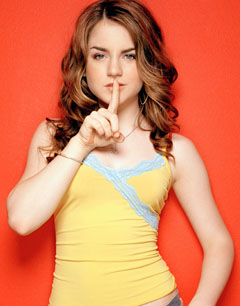
JoJoTrouble for JoJo, after the underage pop popette was spotted in Los Angeles Hyde Lounge, described by the UPI as an "adult locale".

JoJo has seen Seventh Heaven enough to know the routine - a half apology, a little learning, and we can all move on:

"I didn't know it was 21 and over," the "Baby It's You" singer said. "It's a freakin' restaurant and I was there with my mom and two other underage friends. I had milk and cookies! I wasn't drinking alcohol."

We're still at a loss as to who goes to a restaurant in the middle of Los Angeles and has milk and cookies, but we're sure the real moral of this is: Kids, don't smoke.

And remember, just because a place doesn't have topless waitresses doesn't mean it isn't a go-go bar.


Gennaro Castaldo watch: The That came back

Perhaps wisely choosing not to dwell on the miscalling of the Oasis-U2 chart battle, Gennaro Castaldo concentrates on Take That's return to number one:

HMV's Gennaro Castaldo said: 'Take That appear to have much wider and more credible appeal second time around.

'You get the feeling many have warmed to them now they are no longer a teen band. Take That are a bit Cliff-like, in danger of becoming a national treasure.'


We're not sure we can follow what he means here - are they a crumbly, Cliff-like national treasure (which suggests not much in the way of credibility) or are they "more credible"? They can't be both, surely?

It's perhaps unfair to rib Castaldo over his suggestion that U2 and Oasis was the only game in town last week, as - by Thursday - sales figures showing that people were behaving differently. Indeed, he even tried to tell the Belfast Telegraph as much:

HMV's Gennaro Castaldo said Westlife were still fighting for the number one spot, but that he thought indie rockers Oasis had the edge over the record-breaking Irish boy band.

"People might have thought that the race for the number one album this week would be between Oasis and The Beatles and perhaps even U2, but Westlife are proving their enduring appeal and they can certainly hold their own when it comes to chart success.

"HMV still believes that Oasis will have the fan base and broad appeal to sell more copies of their album over the course of the week to land the number one, but it's clearly going to be a lot tighter than everyone imagined.

"It's not impossible that Westlife could upset the odds, while The Beatles aren't out of the reckoning either, but we think Oasis will emerge on top."


You'll note he was by then suggesting that everyone had thought Oasis would run away with it up until the middle of the week - but if that was the case, why had he been talking up a U2-Oasis battle? Still, nice to see that with over half the week's sales done, he still managed to back the wrong horse.

What is questionable, though, is the claim that Oasis have "broad appeal" - they might have a large fan base, but that isn't quite the same thing, is it?

He also popped up in a Sun campaign designed to try and stop Westlife taking the number one spot. Notably less successful than their campaign to stop Kinnock, that one.


Something kind of wooooo-oooooh jumping in my tutu

It's odd, isn't it, how every "haunted place" programme manages to turn up some sort of ghostly apparition to pad out the programming? Almost as if ectoplasm was as driven by the need for celebrity as Sharon Osbourne.

Girls Aloud are doing a ghosty thing for ITV2, for example, and they were spooked by some sort of spook. Cheryl Tweedy felt a presence:

“It was terrible. I yelled and burst into tears when something touched my arm.”

Luckily, it turned out to be an unquiet spirit and not something really horrible like a toilet attendant.

It's not the first time Girls Aloud have shared a TV programme with a bunch of barely-there horrific characters, having appeared with G4 on Popstars.


Who knew there was still more dignity to lose?

The Osbournes adverts work has always smacked of desperation - and, since they're not short of a few bob, we can only assume it's desperation for attention at any price. But who knew that there was a down, after Ozzy's margarine pushing and Sharon's ill-fated time as the embodiment of Asda, claiming that she was a "busy mum" despite her adult children all having moved out to more-or-less round the clock rehab years before.

Last night, Sharon took up her new role: the unnaturally smooth face of Gala Bingo. Yes, she's so needy to be in front of a camera, Sharon has signed on for a truly toe-curling promotion for the online bingo games.

Sharon is seen by a swimming pool in Hollywood, denying that success has changed her (which is true - she's always been horrific) and enjoying a game of housey-housey on her laptop.

Does this mean that Gala's key target - of down-at-heel women getting on a little in years - identify with Osbourne?

The advert raises one question: Osbourne tells us that she's in Hollywood, playing online bingo. Isn't online gambling illegal in California?


Cliff and Hucknall sent packing

The review of copyright in recordings has recommended that the current length - fifty years - be preserved, rejecting calls from record companies, Cliff Richard and Mick Hucknall for a 95 year period of protection.

Andrew Gowers, who investigated the question of extending copyright on behalf of the Treasury, has found no reason to change the rules.

Of course, we're now in for a period of a bruised BPI licking its wounds and pouting, although it seems they've got Daily Telegraph writers doing that on their behalf to start with:

Music journalist Neil McCormack told BBC Radio Five Live it was a blow to the industry.

"This was set before the advent, the big boom of rock and roll. The boom in popular culture which has led to a whole vast number of people making their living from these royalties.

"You can make a record in 1955 and have been getting royalties... been living on that and suddenly they're gone."


Of course, Neil will be especially worried about how he'll survive come 2056 when the cash from his Bono-endorsed People Are Trying To Kill Me runs out. McCormack has long been a supporter of the idea that people should earn a century of cash from an afternoon's work, pushing the case as far back as August 2004, so his moaning now common sense has prevailed is unsurprising.

He fails, you note, to name a single artist who is "making their living" from recordings made in 1955 - because, of course, there aren't any. Most of the recordings from this era are the property of record labels, those stars big enough to have managed to have wrested control back are like Cliff Richard - who might make money from them, but is hardly relying on the Move It royalty cheque before he can go shopping down the Lidl this week, is he?

Throughout, the arguments made by the pro-extension lobby have been - at best - spurious. Had they perhaps found a single singer who was enjoying an old age funded purely on the work he did in a recording studio in the 1950s, they might have had a stronger case. But there's nobody who fits that description.

They've been seen through by Andrew Gowers.


You come on just like special K

As part of the (deserved) hoopla surrounding the launch of lush Josef K miscellany Entomology, Domino US are hosting a couple of free mp3 downloads drawn from the band's Postcard years:

Sorry For Laughing
It's Kinda Funny

Shockingly, over a quarter of a century old; pleasingly, as fresh as they were at the time.


Sunday, November 26, 2006

So, what news from the battlezone?

Desperate retailers were pitching it as the biggest chart battle since Blur v Oasis in the singles charts - indeed, HMV's Gennaro Castaldo considered the release of Please Make It Stop by Oasis and U2EGO such a clash of the titans, they were ordering enormous cardboard cut-outs of Bono and Gallagher to sit by the doorway.

So, who came out top?

Erm, Westlife.

Oasis did limp in at number two, but U2 had to make do with four, behind The pointless Beatles remix album done to soundtrack some sort of circus.

That HMV thought U2 v Oasis was the key event of the week perhaps suggests how far they've lost sight of what matters to their customers. Giant Gallagher-Vox displays were about as relevant to the marketplace as if the Daily Sketch had reported the Second World War in terms of skirmishes between Italy and Canada.


Heather Mills sets up filter on "hag", "harlot", "golddigger"...

This morning's NOTW reports that Heather Mills is increasingly coming to see herself as something of the Diana of our times, persecuted and crushed by a house seen as a national treasure; misunderstood and only wishing to do good.

This may or may not be true, but it's hard to see how Mills could be convinced she's the People's Princess II while she's having to wade through more hate email than a Farepak director every morning.

The Sunday Mirror reports:

Since her split from Sir Paul McCartney, she has been shocked to read hundreds of venomous emails sent to her website from around the world. Heather has been left so distraught by some of them she has asked her staff to weed them out.

We love that idea that hitherto, Heather has been sat at her Dell laptop diligently providing first eyes to her own inbox. Although, maybe she has, as the only other possibility is that her PA has been printing out the acrid emails so her boss can read them each morning.

The Mirror then wobbles a little over the science of all this:

The messages were all sent using an email facility which has now been removed from the website and didn't appear online. It means genuine fans have been unable to communicate with her.

Is it just us, or does that make no sense whatsoever? If it's been removed from the website, how could it have never appeared online?

It's heartbreaking to think that anyone who still likes Mills is unable to send her messages online, although there is still an easy way for the Heather fanbase to communicate with her: she can look in the mirror and talk to herself any time she chooses.

Still, she's putting a brave face on it, telling US TV:

"When all this happened I just thought everybody would blame me so I sort of had my head down. But I get nothing but support - people want to come up and give me a hug."

"Shaking warmly by the throat", as the old music hall routine would have it.

Still, it can't be easy for Heather, who has to present this positive image to people while - according to "close friends" - feeling so wretched inside. It's not like Heather has any experience of saying one thing while meaning something else, is it?


A disturbance on the Beckham's driveway

Goodness, fetch the smelling salts. The News of the World arrives panting with some chilling news:

A BODYGUARD to the Beckhams pulled a GUN on three intruders in a kidnap scare at the couple's Spanish home, the News of the World can reveal.The armed minder dramatically confronted them seconds after they slipped through a metal gate and headed towards the £5million mansion where Posh, 32, and one-year-old son Cruz were inside.

Blimey. A kidnap scare, eh? That's shocking.

Except, of course, rather than a big band of dangerous kidnappers hoping to put Victoria Beckham into a sack of some sort, they were waving guns in the faces of a hapless Japanese camera crew who were filming a documentary on footballer's houses.

The more important question seems to have been missed by the paper. Since these people could have been happily kept off the Posh Lawn by a locked gate, does that suggest the Beckham security team are the sort of people who should be allowed to run about waving guns at people threatening to shoot them? If they can't be trusted to padlock a gate, should they be trusted to cock a revolver and aim at people?

It's not the first time, of course, that the News of the World has run a story about a kidnap threat to Victoria Beckham which turned out to be less than the sum of its parts. The last time, they paid convicted criminal Florim Gashi £10,000 for his story which resulted in a collapsed case and a massive waste of public money spent on trials.


UN calls for moratorium on "Oops, she did it again" headlines

Presumably there must be a few newsrooms left who haven't turned out all their subeditors in the procession towards becoming multimedia hubs - and yet never, it seems, does anyone ever think that headlining an article about Britney Spears "Oops I Did It Again" might not be a little hackneyed by now?

Nevertheless, it's hurled out by the News of the World over some Britney upskirts and rumours that she might have spent the night with two men - two separate nights, it should be said. One of the men was Saved By The Bell's AC Slater, which shows that whatever lessons she may have clicked and carried from her most recent adventures, it hasn't done much for her taste.

The other "man" was, erm, her manager, which the paper tries to work up something from:

She then went into her hotel for a change of clothes — and came out with a change of fella, her boss JASON TRAWICK.

Our man in the US said: "He's her manager but they didn't act like it. It's all very fishy but she is single."

They stayed overnight at PAMELA ANDERSON's pad and were snapped the next day wearing the same clothes.


We're not entirely sure, but the paper seems to be suggesting there's something odd in Britney and her manager not keeping a full change of clothes at every celebrity's house, don't they?


"And now, Status Quo, George Michael and Michael Ball will join Sir Elton for Candle In The Wind..."

We know that the end of next summer is going to be a pretty grim time all round, as the Daily Express marks ten years since the British state somehow silenced Diana Spencer heavily pregnant with sixteen Muslim children by using eye-burning lasers and a decoy drunken, drugged pisspoor driver.

The decade since everyone went a bit doolally is going to be harder for some than others - a lot of people are going to have to try and explain why, precisely, they thought it worthwhile to spend their time travelling down to London to put clingfilm wrapped roses on a pile of decaying vegetation visible from space to mark the fact that even the very rich don't wear their seatbelts.

But now, it looks like it might be a misery for all of us - the delightful, piano-playing princes are all grown up now, and they've decided the best way to mark ten years since their mother had a fatal road traffic accident is to throw a car-crash of a live pop event.

Nothing has been confirmed yet, but the usual names are being trotted out - George Michael, Kylie, Elton John - and Microsoft have already announced that Word 2007 will feature a shortcut allowing journalists to add the phrase "the largest pop concert in London since Live8, two years ago" to their copy with a single keystroke.


This fortnight just gone

The stuff that's been moving on No Rock and Roll Fun while we've been at death's door, desperately hoping he wasn't in.

The top ten most-accessed articles this fortnight:

1. Heather Mills naked
2. Heather Mills naked
3. McFly naked
4. Is KT Tunstall a lesbian?
5. Heather Mills naked
6. We've been unwell
7. Daily Mail's sniff round Doherty's rehab was OK, says PCC
8. Katie Melua gets a girlfriend
9. RIP Paul Walters
10. Jonathan Davis sued over serial killer museum

The big event this week was the publication of the NME cool list,
closely followed by Mick Hucknall suggesting that the RIAA are, in fact, radical socialists

You can read all of this week and the week before on one page,
or browse the week before that in one post

Please put a penny in the old man's hat:


Jarvis Cocker returns from his Parisian exile


Not quite all the hits, but certainly how they'd have been if the current Sugababes had recorded them


Interscope bring out their (Trail of) Dead


Adrian Sherwood and a glittery cast of squillions, including Lee Perry, Mark Stewart...


...talking of whom, The Maffia's 1982 Learning To Cope With Cowardice reappears


The etheklant Kling Klang


The Jam's earliest singles in some sort of box


Brand new stuff from Nanci Griffith


Soft Cell revisted as work-in-progress


We make this the third time Depeche Mode have collected their singles...


... and, just in time, it's Kill MotherFucking Depeche Mode


Boxed-up series one of the IT Crowd


The film of the book which inspired Ride's Seagull


Chameleons filmed live in the US, 2002


Saturday, November 25, 2006

What the pop papers say: The coolest time of the year

Something of a scoop in Thursday's Sun, when Victoria Newton "revealed" the details of the NME cool list 2006. The paper, it seemed, was suffering from mental illness:

MUSIC bible NME has had a brainstorm with the mag’s latest cool list.

ARCTIC MONKEY ALEX TURNER, KASABIAN’s SERGE PIZZORNO and BRANDON FLOWERS from THE KILLERS have all missed out on the top ten.

And the unrivalled king of cool NOEL GALLAGHER doesn’t even make it into the top 50.

But JARVIS COCKER is rated fourth — ten years after PULP’s prime. For the first time, five women are in the top ten, with BETH DITTO from THE GOSSIP top.


Of course, the NME had already been available in London for two days by the time this "story" appeared.

The choice of Beth for number one was - rather than a brainstorm - a rather surprising departure for a magazine which has spent most of the summer trying to shore up its sales against the resurgent Kerrang by writing about the "War on Emo" as if anyone outside of six branches of Hot Topic in southern California cared about it, while giving covers to the likes of Bono and Noel Gallagher and other more Uncut-style "icons". For the paper to suggest that the coolest person in rock was someone making actual indie music with something to say was a surprising departure, and has helped the growing wave of support for The Gossip in the media. Wednesday's Independent, for example, featured Beth on the front of its second section on the strength of her Cool List victory.

There is something slightly awkward about the move of the Gossip into the more mainstream press, though - a sense that, when you read the articles, you come away with the sense that she's famous for being an overweight lesbian rather than a singer; that the embrace of the weeklies and dailies has an element of patronisation rather than celebration to it.

Because if the NME really does believe that Beth represents the coolest thing in rock right now, you don't see much elsewhere in the magazine that represents that. Flicking through the mag in recent weeks, you don't see many overweight people (although, to be fair, there was an article earlier this month which ridiculed the supposedly portly Craig Vines), or DIY indie kids, or feminists, or - indeed - women, come to that, bar an increasing fascination with Keith Allen's daughter, Lily.

More to the point, when Pete Doherty won the 2004 Cool List, he was rewarded for his efforts with a 3D cover. Normally, the Cool List Special Issue is reflected by the coolest person getting the front page. Oddly, though, the paper took the decision this year to lead the Cool List Issue with... a giant picture of Muse, poking the Cool List into a tiny box in the corner, and even then wedging the slightly more conventionally photogenic Lily Allen and Kate Jackson alongside Beth Ditto. If you believe that Beth is the coolest person on the planet rock, NME, why isn't she cool enough to be given a big cover shot?

Unless, of course, you feel that your readers aren't cool enough to cope with genuine cool?

It's not only us who noticed. Yesterday's Sun saw Victoria Newton report that Lily Allen had spotted it, too. First, though, Newton pretended that her story on Thursday had been about "girl power overtakes the NME" rather the actual "NME goes bonkers and doesn't like Serge Kasabian":

Yesterday I revealed that female singers BETH DITTO of THE GOSSIP, KAREN O of the YEAH YEAH YEAHS and Lily appeared towards the top of the magazine's annual list of the coolest people in music.

However Lily feels it is shocking that all-male act MUSE were pictured on the front cover instead.


Good bloody god, we're agreeing with Lily Allen. Newton's story, of course, wasn't the result of any actual journalism - she'd just read it on Allen's MySpace:

"I was approached by them again with regards to the Cool List Issue 2006, five women had made it into the Top 10 and we were asked to pose for photos to be the main feature for the cover.

“The context was so important - a strong female presence in music - so I thought I might as well do it.

"I went to get a copy yesterday, and this is what we got.

"Another fucking MUSE cover."

"CONOR McNICHOLAS, the editor of NME, said: 'From Beth to Lily to Karen, they've brought new energy to a scene dominated by men. They're also living proof that you can still rock a crowd when you're wearing stilettos.'

"I mean how fucking patronising - 'You can still rock a crowd wearing stilletos'.

"Don't make me sick, we've always been here you arrogant prick, this was your chance to actually show you meant it.

"And instead you put Muse on the cover because you thought that your readers might not buy a magazine with an overweight lesbian and a not particularly attractive looking me, on the front.

“Wankers."


MediaGuardian carried a free supplement on Monday reporting the winners of the publishing industry BSME magazines awards. Conor McNicholas picked up one for his work on the NME - although it was for "brand building" rather than the quality of the magazine. His week started being garlanded for the very same thing he was being attacked for at the end of it.

Increasingly, the quirky and left-field is starting to recede from the body of the paper, taking comfort in safe spaces like Christians in Stalin's Russia. So while this week's front page promises - alongside the Cool List and Muse - the none-more-Daily-Telegraph line-up of "Foo Fighters and U2 plus Green Day, The Killers, My Chemical Romance, Jarvis Cocker" (if they had a token Senegalese singer in there, you'd be able to hear Jools Holland playing honky-tonk piano as you looked at the cover), the magazine comes with the first of three, free indie-label CDs.

These are rather good - eschewing the usual trick of burying the actual new names under a handful of headline-hogging recordings from Grohl and Gallagher plundered from BBC sessions or live performances, this week we get a bunch of artists on 1965 (followed by Transgressive and Modular). The previous week, Hamish McBain's Classics Albums had suggested that this series was a kind of twentieth-anniversary nod to C86, although that may only be in his head. (McBain's review of C86 was one of those small secret communions, tucked into an albums reviews page which gave the Oasis Christmas compilation 10 and the Beatles Love album an 8.)

If the paper only reflected what it apparently values (if we take the Cool List as a measure) a little more - if it were a world where the Gossip and Yeah Yeah Yeahs were given most attention while Alex Turner and Serge Pizzorno were given some space, but tucked away down towards the bottom. And Bono never featured.

Still, it was nice to see a picture of Serge Kasabian: are we the only people who think he's increasingly looking like an actor less-than-thrilled to be playing Rembrandt in a BBC Schools TV production of some sort?

And, finally, nice to see some evidence of consistent, clear thinking over at Camp All Saints when Nicole Appleton got to do the Guardian Weekend Magazine Q&A feature:

What is the worst thing anyone's ever said to you?

'I hate you.' I hate that word 'hate' - it should be banned.

[...]

Which living person do you most despise and why?

Ken Livingstone - I just hate all these rules.


Gwen Stefani tired of being alone

The No Doubt hiatus is almost over - apparently Gwen Stefani has signalled her intention to reunite the band next year, as she's tired of solo working:

"I don't think I will make another solo album. I can't predict anything, but I don't plan on making one of these solo dance project records.

"I definitely feel myself going back to No Doubt after this to do a new album."


We love the implication - admittedly probably not that far off-beam - that the rest of No Doubt have spent the last half decade sat around drawing welfare cheques waiting for the phone to ring.


Rocksicklist: Jamelia

Apparently, it's possible to have a hereditary sort of hernia - an umbilical hernia - and it's been gifted by her ancestors to Jamelia. Hers flared up while performing on "one of" Spain's biggest music TV shows, leaving her doubled up in pain and unable to continue with the performance.

Jamelia describes the pain as being "like a bus had hit her stomach" - although it's not clear if that would be a double decker or a bendybus, or what sort of speed it would have achieved at impact.

She flew back to the UK and had microsurgery at a London hospital.

[Her manager] Jonathan Shalit said [Darren] Byfield was planning to see Jamelia following his team’s match at Nottingham Forest this afternoon.

Nothing shows that you're deeply in love like promising to see your recently hospitalised girlfriend after you've had a bit of a kickabout. Why, sending flowers as well would be overkill.


Friday, November 24, 2006

Virgin got the FM; don't want the AM

The Guardian's Organ Grinder blog spent yesterday at the Radio Academy conference.

Andy Duncan from Channel 4 re-announced his TV channel's intention to shake-up British radio - a declaration that has been announced more times than a Labour Party policy, and one that sounds slightly less convincing when the big ideas so far have been getting John Peel's son to play unsigned bands, reviving (sort-of) The Tube for radio, and a British version of The Daily Show called The Weekly Show. None of it is bad, but there's not really much that would shake Lord Reith.

There's a lot of jibes from the podium aimed at record labels, although there is the enticing prospect that negotiations to allow "clips" of songs in commercial radio podcasts are almost complete. Not clips, eh? Twenty seconds of Justin Timberlake - that'll have the kids powering up their ADSL.

The main news, though, is that Virgin want to stop broadcasting on medium wave:

The station's chief executive Fru Hazlitt, said it would soon be cheaper for the station not to broadcast on its AM wavelength. It also broadcasts on digital and has a number of digital spin-off stations such as Virgin Classic Rock.

"We pay huge amounts of money to Ofcom for the AM licence, within the next year or two we should switch it off," she said.

"It just isn't worth it. I would like to switch it off tomorrow. At the current rate of decline [of AM listening] 2010 would be the outside number for us, but if we could speed it up in two years' time then we would."


Someone points out to her that at the moment, Virgin still has 1.7m listeners on its AM frequency, compared with 823,000 listeners on its FM frequency in London, to which Hazlitt retorts:

"That's why I wouldn't switch it off tomorrow," said Hazlitt.

Presumably a different Fru Hazlitt from the one who'd started the session saying "I would like to switch it off tomorrow."

While it's not that important if Virgin switches off Virgin 1215 AM - after all, nearly everybody else has - it raises the question of if this abandonment of analogue radio is such a good idea. Ofcom have indicated they'd consider a switch-off of FM and AM in the longterm, but even they are cautiously suggesting its something we should talk about rather than rush into.

Maybe they should invite Virgin to be a test case?


Esso Club 7

Miles Newman and Isabel Davies, from Aboyne set up a company to search for oil. And - in news which our struggling planet will be thrilled by - found a whole field, all for themselves, off the coast of Aberdeen.

The clue as to what powered their devotion and dedication is in the name of their company, Reach Oil.

Yes, this is the first ever oil company in the world to have been inspired by hearing their children listening to S Club 7.

Oddly enough, their next-door neighbours' kids were listening to a different S Club 7 track at the same time and were also hit by inspiration. The Jacksons didn't make a multi-million pound fortune from fossil fuels, but the sausage rolls Melinda rustled up for the S Club Party they threw that Christmas are still the talk of the estate.


Nelly Furtado: Picture perfect

Pictures of Nelly Furtado naked? You came closer than you might have thought, as she apparently gave a lot of consideration to a half a million dollar offer from Playboy. In the end, she decided she'd say no, to ensure she always had something up her sleeve. Or somewhere:

"It was tempting. It almost plays on your vanity.

"But I like to save a little bit for the bedroom. It's something to be preserved a little bit for yourself.

"But that's not to say that I would never do it. As a pop star, people would love to see you naked every day."


Actually, Nelly, it's not that people nod their head to Maneater and think "that's a great song, I wouldn't mind seeing an upskirt from her", so as much as you're the sort of person people would love to see naked making it a bit easier these days to be a popstar, surely.

Although we might be wrong: if, rebuffed, Playboy carried on working down a list and put in a call to Noel Gallagher, we'll be happy to be stood corrected.


Nelly Furtado: Picture perfect

Pictures of Nelly Furtado naked? You came closer than you might have thought, as she apparently gave a lot of consideration to a half a million dollar offer from Playboy. In the end, she decided she'd say no, to ensure she always had something up her sleeve. Or somewhere:

"It was tempting. It almost plays on your vanity.

"But I like to save a little bit for the bedroom. It's something to be preserved a little bit for yourself.

"But that's not to say that I would never do it. As a pop star, people would love to see you naked every day."


Actually, Nelly, it's not that people nod their head to Maneater and think "that's a great song, I wouldn't mind seeing an upskirt from her", so as much as you're the sort of person people would love to see naked making it a bit easier these days to be a popstar, surely.

Although we might be wrong: if, rebuffed, Playboy carried on working down a list and put in a call to Noel Gallagher, we'll be happy to be stood corrected.


We'll keep the red-head flag flying here

Missing, so far, from the copyright debate has been the champagne socialist perspective. But the rich will not remain silent for long, and so here come Mick Hucknall to speak up for them at last:

Copyright is fundamentally socialist - it is radical and redistributive, subversive even. How else would you describe a form of property that anyone can create out of nothing?

We've always wondered about Mick's politics, and what he exactly believed, but we'd never imagined before that they'd be based on such a fundamental misunderstanding. The whole point of copyright law is to assign ownership of property to an individual and take it out of the public realm - surely Mick must understand that socialism is the polar opposite?

Copyright's democratising effect is seen most clearly in the music business. Anyone who can speak, sing, rap or hum and operate a simple sound recorder can create a copyright song. Imagination is the only limit.

Actually, Mick, you're completely off-beam again. Imagination has nothing to do with copyright - since it is possible for two people to imagine the same thing. Novelty is the only limit.

Having established that he doesn't understand socialism and knows nothing about the basics of copyright, Mick's suggestion that looking at the rigid music industry where most of the sales are dominated by four enormous global corporations shows a "democratising" effect shows he doesn't really what democracy is about either. We'd love to see Mick delivering a eulogy - it'd be a hoot: "I never met Ken, nor know anything of his work or life..."

Mick then goes on to compare, somewhat modestly, the internet with the Frantic Elevators:

The opportunities offered by new technology remind me very much of my own early experiences as a musician.

The ability to hold a face-to-face meeting with people in space, or instantly search a billion documents to find a name, a face, a fact, or to crunch data on global warming at the rate of a million calculations a minute is so much like a cover of Money's Too Tight To Mention we wonder how we never noticed before.

The do-it-yourself attitude of the punk era encouraged me to release Holding Back the Years on our own label when no record company was interested in it.

Actually, Mick, didn't you release Holding Back The Years in 1986, some seven years after you'd formed the Frantic Elevators, and not really as an "early experience", then? You're not trying to shave some years off your cv by any chance?

Internet distribution promises creators and independent companies freedom from the stranglehold that major record companies and publishers have enjoyed for decades over music distribution.

Hang about a moment... if there's this "stranglehold" over music distribution, what happened to "copyright's democratising effect [...] seen most clearly in the music business", then?

Mick, of course, is in something a sticky position here - as a rich artist, he's long had the hump with the majors - to the extent that Simply Red re-recorded their entire back catalogue in order to be able to release it rather than the version held in record company vaults. But he also benefits from the cash raised in the name of copyright.

So, faced with demands from the music industry for longer protection for recordings, who will Mick side with, do you suppose?

The new musical entrepreneurs will increasingly include songwriters, performers and their close advisers, liberated from the boom-or-bust economics of the current record business, and able to earn a reasonable living from their art. As George Clinton said, "Don't fight the system - create your own."

In this environment, arguments against the extension of the copyright term in sound recordings from 50 to 95 years are retrogressive and misconceived.


Unsurprisingly, he's gone with the majors on this one, then.

Mick doesn't explain how an argument for preserving the status quo rather than changing the length of copyright period is actually "retorgressive" - it's unclear if this is because he doesn't understand that the word suggests "returning to an earlier, less satisfactory position", or if he does and just wants to make it sound that leaving the copyright term unchanged would be like some sort of journey back to Dickensian times. When, of course, honest singer-songwriters had to whore out their own children to even be able to afford to die of consumption.

Copyright is not a monopoly restricting the free flow of ideas.

A man who thinks that private ownership is the most socialist thing there is now suggests that the ownership of an idea or concept by a single person isn't a monopoly.

Allowing valuable sound recordings to pass into the public domain does not create a public asset: it represents a massive destruction of UK wealth, and a significant loss to the UK taxpayer as exploitation moves offshore or into the grey market.

Mick... if it's possible to make compilation albums of old songs and sell them perfectly legally in the UK, why on earth would anyone want to "move offshore" or go to a "grey market"? Not allowing copyright free access to songs recorded before the Suez crisis might, perhaps, persuade pirates to start pressing hooky Best of Al Martino collections in their garages to sell round the boot sales; but if K-Tel are knocking 'em out for a couple of quid down the street legitimately, why would they bother? It's a move which makes piracy irrelevant, rather than encouraged.

(Aside from which, when did the BPI last report they'd raided a car boot sale and found 50,000 illegal Glen Miller albums?)

Of course allowing these records to pass into the public domain creates a public asset - by it's very nature, it's creating an asset. You might argue, Mick, that it's not a valuable asset - but you'd be wrong. Unsurprisingly. Given the chance to do something with recordings that are now mostly left sat on shelves, the British people with all their creativity and imagination that you champion may come up with a dozen surprising ideas before lunch-time. Or possibly you'll just find that the over 70s get a chance to buy the songs of their youth all over again and remember happy times of first kisses and first shags and broken hearts, and still have change from their pensions.

Copyright extension is partly about equality for performers, with other creators and with those in the US and elsewhere.

Okay. But... why? Why is it important or even desirable that copyright terms in the UK and the US are equal? And if it is, why do we have to lengthen ours to match their arbitrary term?

It is also about maintaining the cultural value of works by controlling their exploitation.

Well, it's not exactly a socialistic idea he's expressed, but there is something charmingly Stalinist about that one. You can't let someone market a range of birthday cards which play fifty-year old songs when you open them, dammit, it's undignified.

Does Mick really think that "cultural value" of a piece of music is something that should be guarded by statute? Further, a statute which makes attempts to do something else with the tune illegal for a century?

Does Mick really believe that if you allow someone to offer a free download of a song recorded while bananas were still on the ration, the cultural value of that song is somehow diminished?

Does Mick really want us to agree that, yes, the best way to promote the cultural value of a recording is for it to be locked in a dusty room in the vaults at EMI, for making it available on a cheap CD at your local newsagent would be like drawing a crude cartoon cock on the Laughing Cavalier?

But, most of all, it is about nurturing the development of a truly revolutionary explosion in small-scale grassroots creative businesses.

Besides from sounding like the sort of thing you'd read in a Pathways Framework Proposal by a Multi-Disciplinary Funding Regime, it's just not true. Here is a scene, portrated by actors, to demonstrate why Mick is being ridiculous:

Boy: [singing] Lalalalala ding ding blaah...
Girl: That's a great tune. You should record that and release it as a download - 79p a time, you'd make a fortune
Boy: Yeah, I would but... not worth it, is it? I mean, sure, I could be making money off it for the next five decades but why bother? In 2056 someone will come along and make a ringtone based on it and that, effectively, will mean all the money I've made up until then will disappear in a flash...
Girl: Like Cinderella's coach?
Boy: Exactly like that. I'll be living in the mansion with my four Britney Spears clones I've bought with the money, and then - poof! - the copyright will expire and so will all my wealth
Girl: Are you sure it works like that?

Copyright is the sole economic foundation of the "knowledge economy".

Not quite - after all, there are companies that do very nicely out of open source software, for example, by providing support to users.

Strong copyright protection is not only compatible with future digital business models: it is an essential pre-condition of their success.

Yes - look at iTunes: Apple could have a lovely little business there, but who would pay 99 cents for a song when everything available in the store was somewhere for free on the internent? What did they sell in the end - seventy-three downloads before they went out of business, wasn't it?

It would be bitterly ironic if hostility towards certain practices of major corporations were to destroy the opportunity that new technology offers creators to challenge the hegemony of those major corporations, and establish a direct independent relationship with their consumers.

Yes, if you read that slowly, it does say: We have to defeat the RIAA and it's stranglehold on music, and we can only do that by increasing its stranglehold on music.

But he did use the phrase "challenge the hegemony", so maybe there is something of the old Living Marxism in him after all.

The benefits of extending the copyright term will last a long time.

Erm... forty five years, isn't it? Curiously, this 45 year period is a "long time", then, while the current 50 year period isn't long enough.

We should not be deterred by the perception of where the current benefit will chiefly fall.

Yes we do, Mick.

If need be, those who receive windfalls can be persuaded to share them, just as the future cultural and economic benefits will be shared across all of society, for generations to come.

That's right. The RIAA will share the windfalls. This would be the same RIAA who, when caught fixing prices and ordered by law to provide free recordings to schools and libraries dumped their unsaleable back catalogues, would it? I shan't get too excited waiting for my goodie bag from them.

But let's say you really think that - in order that you (sorry, everyone) can keep raking in money for the next century for an afternoon's work - it would be very simple to change the law in a way that assured that. Indeed, since it's supposed to all be about the starving artist, why not gift the extended term of copyright to the original performer? Or say that the 95 term only applies to recordings made from today onwards - making truly not retrogessive?

It is a bold decision, but the right one, and one that anyone who calls themselves a supporter of Labour values, old or new, should be very proud to take.

Well, a few rich people cutting themselves a larger slice of the cake - certainly new Labour should be able to throw their weight behind that.


So, one minute you're sat with Vladimir Putin having lunch, and he's showing you his new sea-salt pepper mill... then you wake up in a hospital bed

And we're (slightly) back...

I'll spare you all the gory details - if I tell you there was foul puss which nearly choked me I'm sure you won't want to hear anything further - and instead just thank everyone for their kind wishes and words, both posted here and sent by email over the last few days.

Also - amongst many other things I have to thank her for - thanks to Shawndra who, alongside having to run round collecting slippers and bath things and sundries had the extra chore to cope with having a blog post being dictated to her

And very, very public and heartfelt thanks to all the team at the Ambulatory Care Unit at Milton Keynes General for their prompt and perfect treatment, especially at the moment where it mattered an awful, awful lot.


Tuesday, November 21, 2006

Up To Our Eyes In Drugs and Nurses

Sorry... we know we're slacking off here.... But we're in hospital sampling some of the few drugs Pete Doherty has left available. Normal service will -dirty scalpels permitting- return later this week.