Saturday, August 02, 2008

2009 looms like a big looming thing

I know. It's not even the end of summer yet, but you're already being called upon to plan your movements for 2009: SXSW are inviting bands and attendees to start registering.


Bookmarks: Some stuff to read on the internet

Perhaps surprisingly, the Financial Times marks the 20th birthday - today - of Gangsta rap:

Opening with the ominous words, “You are now about to witness the strength of street knowledge”, the album that started it all had an instant impact when it came out two decades ago.

“Oh my God, did it ever, man,” remembers Tim Westwood, the veteran British rap DJ and not a man prone to understatement. “We used to play those records hard on the radio and the parties, just crazy ... It revolutionised the game.”


Be seeing you, Own Pet

Sorry to hear this: Be Your Own Pet have decided to complete their outstanding dates this month and then call it a day.


Hypebot teases Columbia Records

There's something a little desperate about a corporate website which takes advertising - since a corporate site is supposed to be selling the organisation it represents to visitors, handing over some of the space to paid-for slots doesn't just look cheap, it's self-destructive. Like going on a date, and talking about your unmarried best friend for half the evening.

So, perhaps, Columbia Records deserved what it got when it started to carry adverts on its homepage. And what it got was Hypebot advertising an opinion that major labels are over.


Sleeper weekend: Alice In Vain

One of Sleeper's earliest songs - it was on their debut EP - from an early appearance at Glastonbury in 20051995. This is Alice In Vain:


[Part of Sleeper weekend]


Bookmarks: Some stuff to read on the internet

Jim Louvau of the Arizona Republic attempts to keep a straight face watching Scott Weiland:

The lengthy set opened with Big Empty from The Crow soundtrack. Dressed in a grey suit Weiland stumbled around the stage and fell into drummer Eric Kretz's drum kit which confirmed he is now officially the Amy Winehouse of rock 'n' roll. When he did sing he often forgot words or changed them. "Conversations Kill" quickly became "Masturbation Kill."

The singer's incoherent rants in between songs were cut off by his band members starting the next song to stop the bleeding. Guitarist Dean DeLeo and his brother bassist Robert DeLeo looked humiliated as they ripped through classics like Wicked Garden, Big Bang Baby and Vasoline.


Sleeper weekend: Top of The Pops weekend

Continuing our mini-festival of Sleeperdom, here's a double bill from the Top Of The Pops weekend. Louise - still dreaming of finding a shirt long enough to tuck into her jeans - leads her colleagues through Inbetweener and What Do I Do Now?


[Part of Sleeper weekend]


Leave me alone, wails James Blunt

Poor James Blunt: he doesn't like people thinking about him:

"I've never read tabloid magazines, but I think it's a pretty unhealthy practice," he told inthenews.co.uk.

"You and I are not dogs sniffing each other, I'm not interested in your private life, nor should I be, and nor should you be in mine.

"We're hopefully intelligent human beings, who can talk about, discuss and maybe even achieve much greater things than learning about who you're shagging.

"So, for me, I've always stepped away from that and now that I'm in the public eye a bit more, I've just tried to ignore it."

Poor James. If he did read the magazines, he'd know that people are interested in who Petra Nemcova is shagging; not who he's shagging.

What is curious, though, is why - if James thinks his sex life should be of no interest to anyone, why did he write a song about getting a semi on the tube and not being able to find the woman who stimulated him so ever again?


Darkness at 3AM: A bit of cock

The 3AM Girls are a little slow, but they get there eventually:

Ting Tings fans, prepare yourselves for a rude awakening. The name of the indie pop duo - who shot to No.1 with debut single That's Not My Name - is Japanese for a male member. No, we're not, erm, taking the rise...

Leaving aside that this story was circulating ages ago, is it true? It might be a slang term - after all, look at all the glorious euphemisms for cock that exist in the English language - but no machine translator suggests that Ting or Ting Tings means anything at all in Japanese; and, indeed, if it was the case that ting ting is Japanese for penis, what does that say about the Japanese snack Ting Ting Ginger Candy?


Sleeper weekend: Nice Guy Eddie

Taken from ITV's ill-fated attempt to revive Channel 4's brave-but-foolish attempt to create a British equivalent to Saturday Night Live, Sleeper do Nice Guy Eddie on Saturday Live:


[Part of the Sleeper weekend]


Gordon in the morning: He's been to the newsagent

Gordon, as a general rule of thumb, people who really do have a brilliant career in the US you'll know about; if someone - like, say, Holly Valance (remember her?) turns up and tells you that they're doing really well in America, it generally means that "doing well" is "the landlord has agreed to wait until next month for the rent".

Not that Holly Valance has told Gordon anything; his big online splash is actually lifted from FHM. Yes, Holly Valance and FHM are both still going. Who knew?

In the paper, though, Bizarre leads on the on-the-spot reports from another person whose portmanteau career has turned out to be all port and no manetau - Vinnie Jones. He was "caught up in" the Los Angeles earthquake earlier in the week. And, although "caught up in" means "was there when it happened", Gordon is happy to run Vinnie's report:

“It was my first earthquake. I was 14 floors up and doing an interview when I could feel the building start to sway. I looked out over LA and the whole place was shaking.

“It was a strange feeling when it kicked off. I felt a bit sea-sick and it made my legs go weird.

“I didn’t know if I should run for the door or just keep staring out the window. Looking back, if the tower block had come down that would have been it for me. I don’t want to be a part of that again in a hurry.”

Well, yes: if a tower block which you were in fell down, it would be tragic for you. But it didn't, mainly because buildings in LA are meant to be able to cope with eartquakes. Given where they are.

In effect, Jones experienced something interesting but his inability to verbalise it makes it less informative even than the USGS page.


Castles crumble

Crystal Castles aren't coming to Britain this September: they've got 'recording commitments'. Tell a lie, they are coming, but they're only going to play Camden. Musn't let down Camden, must we?


Embed and breakfast man: Sleeper

We did do a YouTube selection for Louise Wener ages ago, but that turns out to have been one link, to a video which has since been removed. And, since we fought passionately on the side of Sleeper in the 'it's not proper guitar music if you quite fancy the person singing' wars, it seems only right we should give the band a proper celebration.

There was always a slight disdain for the band; Louise was too opinionated; too pretty; the band were too poppy. All the things that, say, Suede were praised were seen as weak points for them. There was a nasty sense that indie kids didn't mind girls in bands, but not ones who actually wore skirts. It probably didn't help that the rest of the group weren't entirely memorable - hence Sleeperblokes - but how many members of Mega City Four could an average punter have supplied if required?

And were they really that dull? Jon Stewart wound up doing session work for KD Lang, which is a handy item to fling on your CD.

Louise has gone on to write books. Pretty good books. But it's music's loss.

Anyway, this is just too good to resist: Statuesque on the Tony Parsons fronted Big Mouth from the 30th April 1996:


Buy
Sleeper best-of although with only twothree proper albums, there isn't much to argue against buying those:
Smart
The It Girl
Pleased To Meet You - the existence of which I had totally forgotten about
Worldwide Adventures In Love - Wener's latest novel, published last month

More videos across the weekend
Nice Guy Eddie on Saturday Live
Inbetweener and What Do I Do Now live at the Top Of The Pops Weekend
Alice In Vain live, Glastonbury 1995
Click... Off... Gone live, TFI Friday, 1996
Louise Wener on TFI, Celebrity Poker & Shooting Stars
Delicious and Little Annie live, Glastonbury 1995


Portishead go home

Portishead, oh blessed place of memory: it was to Portishead where you would send your stamped, self-addressed envelope to get Radio One information packs in the days before the internet. It's also where Portishead come from, and, indeed, where they went back to last December.

They played a gig at Geoff's old school, and they've made a half-hour special feature out of it.


Friday, August 01, 2008

Like shooting whales in teacups

Well done the police who - acting, we're sure, on a hunch - pulled over Snoop Dogg's tourbus and found two guys with some cannabis on board.

The arm of government claiming these scalps?

The Texas Department of Public Safety.

I'm hoping for a detailed explanation of just how the safety of Texan members of the public has been improved here.


Teletext Magazine

We've always snurkled a little at those adverts which try and position Teletext as the cutting edge of breaking news, but fair play to them: breaking the news of Magazine's reunion plans is pretty impressive:

The line-up is Howard Devoto, Barry Adamson, Dave Formula and John Doyle. Promoters Gig Cartel told PS: "We don't know who will play guitar in place of John McGeoch. It may be a special guest, but we can't confirm who yet."

There's two dates planned for February 2009, one in Manchester, one London.


A snapshot of that new world

Big Champagne - who have been counting torrent downloaders since the days when people still used to ring up their mate who was good with computers to do it for them - have issued some interesting stats about Radiohead's In Rainbows, which PaidContent see as some sort of sign that we're all doomed:

Some 2.3 million people skanked Radiohead's latest album from BitTorrent sources during the two months it was legally available for free. A research paper from P2P monitor Big Champagne and the UK's MCPS-PRS royalty collection society said the "staggering" number "far exceeds what outsiders have reported as the estimated download total from the bands official website, regardless of whether those downloaders paid or not".

See? Even if you try to give people something nice, they'll still rob it! Doom! Darkness!
Maybe so many people are already downloading the rest of their albums from torrents, they simply couldn't be arsed to type inrainbows.com in their browser. The bottom line is that legal free was trumped by illegal free.

But is this really doom? Isn't this news quite cheery for the music industry? Scroll down the report a little:
In Rainbows torrent downloads peaked on the first day data was collected, October 27, at 400,000 - what Page and Garland call "a bloody big number". How big? More than double the top torrent through March and May (Panic At The Disco's Pretty Odd) got in a whole week (ie. 10 times Panic's daily average).

So, what we're talking about here is not large numbers of people habitually pinching albums. What we're talking about is a spike in free downloading of an album that was available for nothing.

So, while the MCPS scare about for sky-falling reasons...:
The report's "venue hypothesis" posits net users have simply become accutomed to using technologies like Gnutella, BitTorrent and trackers like Mininova. What's more, "an off-limits venue may be even more appealing" to the core youth market. So illegal is now entrenched, it's habitual and the business faces an uphill struggle to change that.

... isn't the evidence telling us that people do have the ability to download stuff from the torrents, but mostly aren't using that ability; and that they only did when they had reason to believe it was okay to do so. Because can anyone explain to me the actual, real "illegality" of downloading for free something from one place that one can legally download for free from another? I don't mean the letter-of-the-law difference, but the moral difference? And, even if you can, isn't it just possible that the nicety was lost on the great masses who heard Radiohead were making an album available for free (as was repeatedly, erroneously, reported at the time) and didn't see there was a problem in where they didn't pay for it?


Mike Batt predicts starvation from unchecked bread downloading

Mike Batt: he's given us a lot of dubious value - the Wombling Merry Christmas, Katie Melua, and now, a piece for The Times where he sets out to prove that - oh, yes - illegal downloading is killing music using any argument he can think of:

Why do people illegally download music? Because they can.

I hate to jump all over his opening line, but this isn't actually true, is it? First of all, there are huge numbers of people who have the ability to illegally download who, for whatever reason, choose not to.

And isn't the fact it's "illegal" means that, rather than doing it "because they can", they're doing it "despite they can't"?

Of course, what Batt is doing here is arguing for bans, for blocks, for making it impossible to download, and so it serves his case to claim that if people can, they will. Don't fall for it, though - people can download graphic images of people having sex with large waterfowl, but don't act on the ability.

Batt then reminds people that the BPI has grudgingly accepted a deal with ISPs:
This has been welcomed by most musicians, industry organisations and fair-minded consumers.

Well, let's leave aside the evidence in the Guardian this week that the industry organisation which negotiated the deal hasn't actually welcomed it and instead sent out petulant letters insisting that the agreement wasn't, actually, in any way binding at all, and instead look at that assumption that if you disagree with the deal, you're doing so not because you have valid worries - it's just that you're not fair-minded.
Reasonable people agree that musicians should be paid for their work.

Aha! You must be fair-minded, because it's only fair that people get paid for their music, see?

Batt doesn't entertain the propsect for a moment that a fair-minded person might object to the deal that's been cut for reasons unconnected with the rights and wrongs of paying for copyrighted work; that a fair-minded consumer might have a problem with the idea that ISPs are being given a role which places them, however loosely, as having a reason for looking at what their customers are doing with the connections they provide, for example.

Or that a fair-minded person could - without losing any sense of reasonableness - conclude that the correct response to a customer base moving to a dubious distribution network is to accept the consumer is king and work out how you thrive in a new reality rather than spending hundreds of thousands of pounds trying to protect a world that has gone.

Batt, though, is surprised that not everyone is applauding his BPI chums:
But there has been negative comment. Last week I read an article by an otherwise sane and respected musician and journalist who said that downloading music free was like “downloading air”, implying that because you can’t see it, it should be free.

I'm trying to decide if Batt is really unable to understand the journalist's point, or if he's just feigning stupidity. It can be so difficult to tell the difference, but let's be fair to him and assume that he really does understand that the writer isn't making a "if you can't see it, you shouldn't pay for it" line of reasoning, and that Mike Batt knows that the point it that music is no longer a thing which is of limited supply - that always on, digital, hyperconnectivity limewired sharing services and cheap storage means that music has moved in the last two decades from being something you had to get a bus into town to purchase, to something that surrounds you. The writer's point, let us generously assume Batt actually knows, is that music is no longer a scarce product, and there are economic realities about products whose supply is unlimited.

Not that these have to be heartbreaking for those that would make a living selling music - after all, oxygen, being part of air, is both invisible and all around us, and yet the British Oxygen Company managed to figure out a way to build a fine business out of selling it.

But does Batt really know that he's misrepresenting the views of the person whose argument he has sketched?
He also said that it is “so cheap to get recorded music to the audience that artists no longer need a major label”.

He does. Interesting Batt chooses to decry his intellectual opponent - "otherwise sane" - without offering the man's name. Could it be that Batt was afraid that if he named the other writer people might look for the original article and see that he was deliberately distorting the other side of the debate? (It was, by the way, Bob Stanley writing - also - in The Times. If only Mike had mentioned that - the paper could have hyperlinked its two articles together. Maybe Batt was just afraid at making it clear that he believed The Times was publishing the rantings of someone who is, on this subject at least, insane.

But Mike has moved on - to dis the h8rs:
Hating major labels is about as useful as hating film companies and supermarkets. They exist.

We're a little lost here - saying 'hating a large company is the same as hating a large company' seems to be self-evident; it's like saying "hating the Bishop of Durham is about as useful as hating the Bishop of Chichester". It's not actually an argument against doing so.

And is it so useless to hate supermarkets? Might it not lead one to conclude you'd be better off trying to shop locally, or grow some of your own vegetables, perhaps? To take that hate and make some small changes which, ultimately, might make your life better? And even if you do accept that you won't bring Tesco to its knees, viewing it as hostile, and keeping an eye on it as it screws over farmers, ignores planning regulations, organises its taxes to ensure it gives as little as possible to the country that educates its staff and underwrites the welfare of its customers, or makes outrageous libel demands against Thai intellectuals, and making sure it is called to account when it does so - surely that isn't useless?

The other side of the Batt argument - "they exist" - hardly stands up to any consideration, either. They exist now - but, in the past, debtor's prisons existed. Truck ticket shops and highwaymen and Bradford Park Avenue once all existed, but the mere fact of their existence doesn't mean one is obliged to come to view them with delight. We think Batt is using their existence in the sense, though, that they exist like the sun, or HIV, or spiders and that their existence is inarguable and part of creation and thus we'd better get used to them and stop bloody well complaining.

But record companies are not natural phenomenona, and like Bradford Park Avenue and truck ticket shops and highwaymen, it is all too easy to imagine a world in which they didn't exist. Some of you, I suspect, imagine just such a world as you say your prayers at night, or offer up a small sacrifice to Hecate, or blow out your birthday candles.

Indeed, it's where Batt's linking together of the record labels and the supermarkets falls down. Imagine the consternation if all the supermarkets vanished overnight - it's hard to even see a way the food distribution network in the country would function. But should the hqs of EMI, Universal, Warners and Sony-BMG be ripped from the Earth by a tornado of some sort, a nation would scratch its chin, and hit shuffle on the iPod.

Still, Batt spells out some simple economics for us:
There will always be dominant players, but there are also about 800 independent record labels in the UK including my own, Dramatico, which has 14 staff and a network of about 50 freelancers around the world. Without the toil and passion of my employees my artists wouldn’t be selling records. Without payment for the music made by our artists we wouldn’t be able to pay our staff. Then the staff would leave and so would the artists.

Nobody would want to see those people thrown out of work, but - being honest - if you're running a business that's trying to sell something that people don't want to pay for, however sad it is, you're probably going to go out of business unless you can find a way to make money in some other way. Batt seems to be starting from the - admittedly understandable - stance of believing that his business must continue and that the world must be rearranged to ensure that happens.

But the world has shifted - in the same way it shifted and cost the guys who worked in video rental libraries their living, and made Tippex a less valubale commodity, and turned coalmen into yesterday's men. One of my forbears used to look after the horses for a brewery - I'd bet that he would have written an impassioned piece arguing that horses must be used to pull dray wagons had he be given the chance. But nobody was going to pay for horses when there were shiny vans to be had. Things change. People get hurt. But wishing it wasn't so doesn't stop it happening.
If you could download a loaf of bread free you would. But you can’t, thank God, because otherwise bakers would cease to exist and there would be no bread to download.

Actually, Mike, most bakers have ceased to exist - they were run out of business by undercutting from those supermarkets you don't want us to hate.

Is this true, though? After all, you can go to a hospital and have your broken bits fixed for free, but people still pay for operations privately. There are many free sources of news, but newspaper circulation is still surprisingly healthy. The Science Museum, apparently, introduced charges for some of its events because people didn't bother to turn up for free ones. Some people might take the download of bread, but others would continue to buy bread.

Batt, though, is warming to his world of digital loaves, and what a dystopia it is. A dystoastia, too:
Then we’d all be dead, and good riddance to us, because we humans are greedy, thieving, conniving bastards, every last one of us. That’s why there are laws to stop us.

What a terrible, terrible view of humanity this man has. What a black outlook. He's also a philosophical idiot, but let's just spend a couple of moments sending mental hugs out to Mike Batt. Let's show him some love, some of the love that he doesn't believe exists.

If every last one of us were greedy, conniving and thieving - leaving aside how Batt would explain charity and volunteering and those people who bring cakes into the office on a Monday morning - then we wouldn't have laws, would we? There are only laws because of an agreed moral code in a society; the codification of morals is there not because without it, nobody would be trustworthy, but because there are a small few people who would behave badly. I suspect that even Batt, if he was walking down the street and saw a dropped wallet, would not think "I'll have that", or even "if only there wasn't a law against stealing, I'd have that", but "where should I hand this in?"

There's also the bigger point that commercial music is not like bread in a very important respect - it isn't essential to living. Now, music - yes, that may very well be vital; certainly, I wouldn't have a life without some music in it. But commercial, recorded music is not the very staff of life. In that world we imagined a moment back, where there was no EMI, we can still hear music - birds singing, church bells ringing, a high school musical (as opposed to a High School Musical); the happy sound of a mother singing a nursery rhyme to a child. Let us not allow Batt or the BPI to pretend that the process of putting sound onto a recorded medium and pitching a marketing campaign is the actual music.

Batt, though, suddenly changes tack from his breadless land of dying bastards, and has a pop at Prince:
It is tempting to top up your profile by giving your music away free on the web, or as Prince did, by means of a newspaper cover-mounted giveaway to millions of people (his previous album had sold fewer than 90,000 copies in the UK).

But let’s not forget that Prince was paid handsomely for the stunt (at least £150,000).

Isn't this actually running against his argument? Since Batt has spent his time setting up a demand that music must not be free at point of consumption, as nobody makes any money, isn't it a bit foolish of him to suddenly point out that Prince has found a way of giving consumers music for nothing - besides the shame of being seen purchasing the Mail On Sunday - and still make enough to buy a good lunch and a gallon of petrol?
Equally Radiohead, who last year set up an honesty box for their Mercury-nominated album, In Rainbows, had already made millions with their previous albums, so you could argue they could afford to ask people to pay what they wanted to.

Actually, Mike, capitalism works on the belief that people pay what they want for things - the difference with Radiohead was that the price slid to zero. But it's a fair point - Radiohead weren't going to end up eating beans out of cans if everyone took the album for nothing.

Trouble is, of course, a lot of people did pay for it, didn't they, Mike? Which demolishes your claim that if people can get something for nothing, they won't pay for it.
And anyway, without being being cynical about their motivation, the “experiment” also wasn’t bad in attracting attention for the physical release of the CD, which followed a few months later.

Again, though, you've spent ten minutes insisting that if something is made available for free, nobody will ever pay for it again, but now suggesting that giving something away is a great way to persuade people to buy something.
It’s nothing new that the entertainment business is “dog eat dog”. When I came up to London three times a week on the train from Winchester in 1968, a hopeful 18-year-old trying to sell my songs or get signed by, well, anyone really, there were four majors – EMI, Pye, Phillips and Decca. And there are four today – EMI, Universal, Warners, Sony/BMG and Universal. It was just as difficult to have a hit then as it is now. Just as hard to get noticed. The business was just as full of arrogant charlatans with kind, helpful faces.

It's actually a lot easier now, Mike. In 1968 there was one pop station, no music television; certainly no internet. There was, of course, pirate radio still, in 1968, but given how much you object to illegal downloading I'm sure you would retrospectively condemn those guys, wouldn't you? The people who floated about, not paying transmitter licences, ignoring the needle time restrictions without which honest, hard-working studio musicians would lose their jobs? I'm surprised we haven't heard you calling for Tony Blackburn to go on some sort of show trial.

Now, though: MySpace. YouTube. Blogs. BBC Radio Humberside's Raw Talent programme. There are numerous outlets to build a fanbase. It's still hard, but digital makes it so much easier. And you don't even need a label to make money from your music - you can really do it DIY in a way punk only ever dreamed of.

Batt admits this:
Today it’s a different mixture, though, with different challenges and opportunities. Bands and artists can display their wares on YouTube and MySpace, and record companies can audition artists without even leaving their offices.

Hurrah! Right, Mike?

No, it turns out this is a bad thing:
But, because of this easier access, telling wheat from chaff is more difficult.

No it isn't. A good song is still a good song. If you mean there's a lot of stuff that isn't very good, well, yes, but there are also a whole slew of tools which make it easier to sort through and find what you like: last.fm, mp3 blogs, trying albums before you buy by downloading a couple of tracks. There is as much wheat as ever, but better still, there's much better winnowing equipment. And we - the audience - are able to hear a load of stuff that we'd never have got to have heard before. Stuff that we'd have not heard not because it was poor, but because it didn't fit with what the A&R person was after when they auditioned, or what his boss wanted, or what her boss was willing to fund.

A few years ago, for most people, hearing a recording by an unsigned artist was rare - like talking to a foetus or tasting an ungrown apple. The very fact of their being unsigned made it hard for their music to get to you. But now? It's hard to log on to your computer without having six or seven bands who only formed last night poking their demo stuff into your eyes. (Although Firefox users have the option of a plug in, I'm given to understand.)

But this is the trouble - Batt isn't really worried that music will disappear; or that we shall all starve culturally to death. He's afraid that the sort of music business he understands is vanishing. And, naturally, he wants to defend it, even if it means making yourself look foolish in the newspapers and calling for telephone companies to send angry letters to their customers:
Record companies have it easier and harder. It’s easier to get the music to the online customer, but harder to protect it from theft. New business models are being sought and invented all the time. ISPs talking to record companies in order to limit online music theft through their broadband channels is good news for everyone except those who think all music should be free and musicians should go out of business.

Nobody wants musicians to go out of business. But if everyone spends their time and effort trying to keep a structure of prices and way of working from the 1940s alive, a lot of recorded music businesses will go under.

If god started to rain bread down on the planet, which bakers would propser, Mike? The ones who called for the government to invest in an expensive bread umbrella, to stop the bread from falling? Or the ones who set up travelling slicing machines, went into partnership with the butter churners, and accepted that things have changed?


If only he'd spent as long on the 'who comes next' problem

More from Alan McGee's gossipy interview with Uncut, as he reminds us that he hung out with Tony Blair:

“Blair is in a T-shirt and Bermuda shorts and we’re discussing the new Oasis LP, the Beatles . . .” McGee told Uncut. “We talked about who was the best songwriter in Teenage Fanclub - he thought Gerry [Love] and I thought Norman [Blake]. “That was the conversation I was having with Tony Blair. That’s how strange, how totally fucking psychedelic things had become.”

Of course, for quite a while McGee and the Gallaghers had been hoping that everyone would forget their shining-eyed endorsement of Blair, but now that the nation is trying to work out how things were able to get worse, it seems that the Creation/New Labour years have moved from 'awkward embarrassment' to 'worth name-dropping' again.


Must we fling this flower at our filth kids?

Who does Alice Cooper credit for his success? The last woman you might expect, it turns out:

Alice Cooper tells Leona Graham on Virgin Radio that criticism of his band by Mary Whitehouse was the greatest thing that could have happened. He says: “We were sending her roses every day saying thank you. And she couldn’t figure out why.”

Likewise, of course, nobody could ever work out quite why Whitehouse was so outraged by Cooper; it was like being upset by Hector from Hector's House, as his subsequent career has shown.


Bookmarks: Some stuff to read on the internet

Bob Stanley tells The Times about the time Saint Etienne tried to nab the gig theming the Bond movie Tomorrow Never Dies:

Along with our arranger Gerard Johnson we booked a day in a London studio and worked out a demo called Tomorrow Never Dies. Clearly, this entailed us avoiding most of our favourite lyrical subjects (cars with the top down, escaping the city, listening to the radio, sitting in the pub) and contemplating some less familiar to our world of pop – cars with ejector seats, escaping from megalomaniac baddies, having sex with eight women in 96 minutes.


Britney's knickers nix snappers

There's been an attempt in LA to introduce some sort of law to curb the excesses of the paparazzi - clearly, the city is worried that if it becomes impossible for anyone who has ever had a guest slot on Lost to walk down the streets without having their arse photographed from sixteen angles, the celebrities might take their lovely money somewhere else to live.

However, the local police - seemingly keen to live up to their doughnut-eating, crime-missing stereotype - aren't that keen on having more work to do and so are suggesting that, oddly, there isn't a problem any more:

"If you notice, since Britney started wearing clothes and behaving; Paris is out of town not bothering anybody anymore, thank god; and evidently, Lindsay Lohan has gone gay, we don't seem to have much of an issue," [LAPD Chief William ]Bratton told KNBC, L.A.'s local NBC affiliate.

He went on to offer similar sentiments to several other local outlets, calling the would-be crackdown on paparazzi a "farce," and further claiming that interest in candid pics has already waned.

Bratton is a grown man, and yet he believes that Lindsay Lohan going sort-of-perhaps Sapphic has made photographers less, rather than more, interested in her. He should try standing outside his police station and shouting "look - isn't that Lindsay Lohan kissing A LADY" and seeing just how uninterested they are.
"If the ones that attract the paparazzi behave in the first place, like we expect of anybody, that solves about 90 percent of the problem. The rest we can deal with."

Now, it's true that Britney might have drawn a little attention to herself, but given that she was clearly, actually, out of her mind - not to mention hounded every time she steps outside the house - it's hardly fair to just snort "she brought it on herself". Is Bratton really suggesting that the mentally ill shouldn't be protected if their behaviour makes them draw attention to themselves?

Still, let's take Bratton at his word, and see this as a wonderful victory for self-regulation. Presumably he'll be pushing for the city to adopt the same approach to pimping and drug-dealing. LA might wind up not needing a police force at all.


Paying Bono to go away

People have decided that the world has suffered enough, and it's time to organise to free those living in terror and misery.

Yes, there's now a charity which is attempting to raise enough to persuade Bono to get out of public life:

OBJECTIVE
To get Bono to retire from public life (so he'll stop leading misguided counter-productive philanthropy efforts) ....and, simultaneously.... to make a huge donation to fight AIDS
MEMBER PLEDGE
We will give money to: Global Fund to Fight AIDS, Tuberculosis and Malaria

But we will only pay if we meet our objective

So far, there's $390 dollars in the pot - I'd hazard that isn't quite enough to persuade Bono to give up shaking the hands of the powerful and appearing in photographs with those almost as rich as him, but I wish them well with their efforts.


Mystery illness continues, updated

The Mystery Jets have canceled their August UK festival dates, following the tour they pulled earlier in the Summer: Blaine Harrison is currently in hospital with problems linked to his spina bifida.


Gordon in the morning: That bloke's a nutter

Gordon brings us news this morning of Jim from The Corrs, who is furthermore a Corr. He is, apparently, a "nutter":

He insists that the tragic events of 9/11 a hoax — and that European cooperation is being masterminded by a secret group of political plotters who want to turn the entire globe into a Soviet-style socialist state. Phew.

I'm not sure, but I suspect Gordon means Corr believes 9/11 was an inside job rather than a "hoax", which would imply that it didn't happen. Like the moonlandings.

Still, Gordon has no time for this sort of thing:
His theories are plainly laughable and cribbed from unreliable internet sources.

Goodness - imagine that. An unreliable website whose readers believe every word they read on it. Does that remind you of anything, oh, Prime Minister of Gossip?

You wouldn't get Gordon Smart encouraging people to go online and bang away about things they can't possibly know about, would you?

Oh... hang on: what's this at the foot of the Corr story?
Have Your Say
Tell us what you think of this story
Add your views


Thursday, July 31, 2008

Keys stubs out the fag sponsors

So, are we to believe that Alicia Keys was unaware of the sponsorship of her Jakarta gig by Philip Morris, or just unaware that anyone would notice until the Campaign for Tobacco-Free Kids started to make a fuss?

Now, the adverts for the ciggies are being taken down - although it's not clear if the concert is still being underwritten by the cigarette manufacturer. And Keys has issued a statement:
"I apologize for any misleading advertising initially associated with the show," she said in a statement released by her record label, Sony BMG. "I am an unyielding advocate for the well-being of children around the world and do not condone or endorse smoking.

"I look forward to bringing my music and message to my wonderful fans in Jakarta."

It's funny, that - so desperately anti-smoking, and yet somehow her gig has been promoting it in Jakarta. You'd have to wonder how that could happen without her knowing.


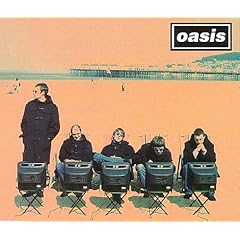
Oasis: Sit down, you'll sink the bloody boat


That's Weston-Super-Mare Pier, which burned down on Monday.


That's Sister Ray records, which went into administration today

Al Lorraine emails to ask if New York should be worried:


Ryan Adams: His response

Having been accused of something or other by Courtney Love - stealing her money from Kurt's hands or something like that - Ryan Adams has maintained a dignified silence so far.

To be fair, he might have been trying to work out exactly what he was supposed to have done before coming back. And now he has done so, in a way that's quite kind to a woman clearly in distress:

these days i find myself working harder than ever at being at my best, overcoming my fears and pushing myself creatively in my every endeavor. my only wish after the work is completed is that it may prove further evidence that no matter how isolated we all may all feel at times, as sad or misrepresented, we are not alone. there's hope for and within each of us.

I've been dealing with the truth that i have at times been a bad example and/or glorified self destructive behavior. this was never intentional, but rather a consequence of leading a public life in plain sight and never expecting any sort of preferential treatment, isolation or protection.

Regardless of varied judgments as to my cultural relevance, i am thankfully alive and exercising my joy in creating. i only hope anyone who hears, reads or sees any of my contributions will permit the work to speak where i cannot.

i've realized and accepted that if people decide to dislike me, they're going to find reasons to justify disliking me. there's nothing i can do about that. that said, it still does pain me to be accused of fictional crimes against innocents or to be implicated in romantic gossip involving the possibly reality-challenged--however unreliable the source or outlandish the accusations. in the end, however, i know that i have never done or even meant anyone any harm.

anyway, the lives of public figures are so much more boring than anyone can imagine. honestly.

and also i like metal. A LOT. (even more than last time).

We're guessing the use of lowercase is to set himself stylistic against Courtney's Caps Lock happy approach.


Bringing up young talent

Akon is thrilled to have worked with Michael Jackson:

"You know how you come into a career and set your goals as to where you wanna start and where you wanna end? I had a wish list of all the collaborations I ever wanted to do. Mike was at the top. I was saying, 'Well, if ever I get to Mike, then that'll be the sign I can retire.' But I got to Mike 10 years earlier than I expected. So I decided not to make retirement goals anymore.

"I think at the end of the day, it was one of those situations that caught me off guard," he added. "I didn't realize I was working so hard to actually capture his attention. That really showed me. That's the day I realized I made it."

We're sure that Jackson can see a lot of himself in Akon - after all, it's not so very far from giving kids vouchers for free sex toys to sharing Jesus Juice with young friends, and the whole dry-humping underage girls was just the same sort of 'all in everyone else's dirty minds' misunderstanding that could happen if you hang out with other people's kids in your pyjamas, huh?

We love that he calls him Mike, though. I guess there's no humiliation Jackson won't undertake in a bid to try and scrape some credibility back together. I bet Will I Am calls him MickeyJ.


The Republicans are running low on ideas

Last week's John McCain adverts - which basically were 'oh, you all love Obama, why don't you marry him if you love him so much' - seemed pretty weak.

But there was a further down to go. The latest Republican advert runs through the following logic:

Obama is really popular.

Britney Spears is really popular.

Therefore, voting Obama is like voting for Britney Spears to run the country.

Yes, that'll work. I now really believe that Obama will be sworn in wearing a skintight pleather catsuit.